From time to time, our peers in Asia will alert us to developing stories on the state of economic affairs in their home region. On 30 August 2021, they really rang a bell suggesting they were highly concerned about the potential for a developing recession within the region.
Just over two weeks later, we can confirm their fears for the future have largely abated. But that doesn't address the developments that led them to have cause for concern. Here's a sampling of headlines that coincided with their heightened concerns:
- Global supply chain crunch deepens as Delta variant surges
- Southeast Asia roundup: Chip shortage worsens as COVID hits Vietnam, Malaysia
- Factories hit by pandemic-related supply disruptions
- China’s factory activity expands at slower pace in August, services contract
- China’s services activity contracts for the first time since early 2020, official data shows
- "Absolute Shocker": China's Service Economy Unexpectedly Implodes With 2nd Worst Non-Mfg PMI Print On Record
- China’s environmental goals are driving aluminum prices to a 10-year high
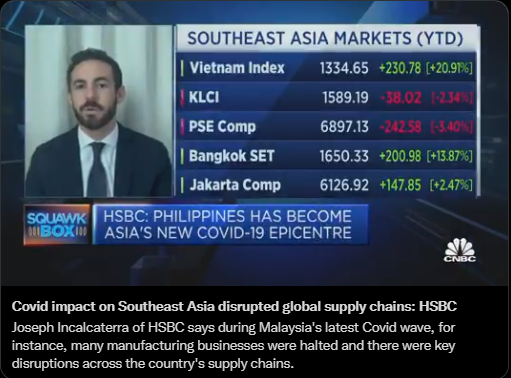
All but the last story is significant in demonstrating the extent to which the coronavirus pandemic is still driving national economies. Among the nations of southeast Asia, which had largely escaped the negative impact of COVID in 2020, it's having an especially large impact. One with global dimensions:
Covid's impact on Southeast Asia has disrupted global supply chains, says Joseph Incalcaterra of @HSBC. pic.twitter.com/rDSuJYONhy
— CNBC International (@CNBCi) September 6, 2021
That impact has been building since June 2021. We'll feature an estimate of how disruptive COVID has been to the global economy tomorrow, when we'll also explain why that last headline matters.