The S&P 500 (Index: SPX) moved back toward bear territory in the trading week ending on 2 September 2022. Geopolitics, particularly those emanating from the Eurozone, played an outsize role in sending stock prices to their lowest level in weeks.
The biggest reversal came on Friday, 2 September 2022, when the index swung from being up as high as 1.3% in the morning to instead close down by 1.2%. The major factor driving that development was Vladimir Putin's announcement that Russia would shut down gas pipelines going to the European Union indefinitely. The action will likely drive the Eurozone fully into recession.
And if not that, the higher interest rates the minions of the European Central Bank are considering to combat the inflation caused in good part by having the continent's Russian-supply of oil cut off may also do the job. The Eurozone doesn't lack for bad options and its problems appear are bleeding over into the U.S. stock market.
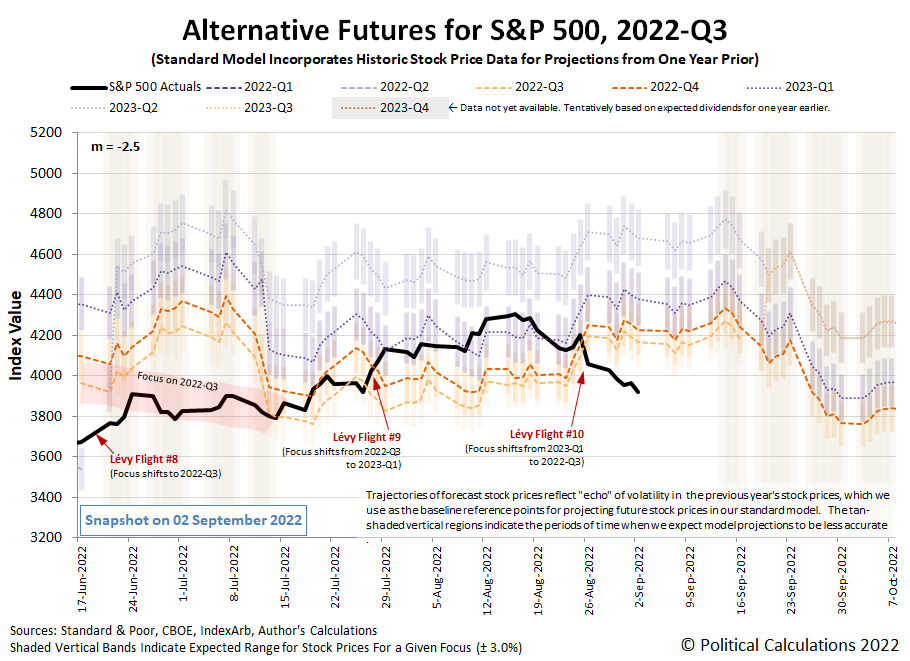
If not for the geopolitical noise event, we think the S&P 500 would be tracking more closely to the alternative trajectory associated with investors focusing on 2022-Q3, which is where they had clearly set their focus as early as last week. At least, until the deep hole the Eurozone is in got deeper. The market moving headlines of the week that was capture those developments along with the U.S.-based market drivers that primarily influence the U.S-based index.
- Monday, 29 August 2022
- Signs and portents for the U.S. economy:
- Oil settles up more than 4% on prospect of OPEC+ supply cut
- Central banks will fail to tame inflation without better fiscal policy, study says
- Pain of breaking inflation will reverberate around the globe
- Senator Warren worries that Fed will tip U.S. economy into recession
- North American companies send in the robots, even as productivity slumps
- Fed minions "happy" with reaction to Powell's Jackson Hole message:
- Bigger stimulus, trouble developing in China:
- China's August factory activity likely shrank amid COVID flare-ups, property crisis - Reuters poll
- China policy steps this year exceed those of 2020 - state media cites premier
- Bigger trouble developing in the Eurozone:
- ECB minions thinking about multiple, bigger rate hikes:
- Wall Street retreats as rate hike concerns persist
- Tuesday, 30 August 2022
- Signs and portents for the U.S. economy:
- U.S. labor market defies interest rate hikes as job openings rise high in July
- Oil dives nearly $6 a barrel on demand fears, Iraq exports
- Fed minions say recession they're making won't be all that bad, want to end rate hikes before 2023:
- Fed's Barkin: no need for possible U.S. recession to be 'calamitous'
- Fed could 'dial back' 75-basis-point hikes if inflation slows, Bostic says
- Fed's Williams: no rate cuts expected next year
- Bigger stimulus developing in China:
- ECB minions getting excited about developing recession, thinking they need higher interest rates:
- ECB's Lane sees euro area slowdown, does not rule out technical recession
- ECB must act decisively; recession fears should not constrain policy -Nagel
- ECB rates may need to go higher than neutral, Wunsch says
- ECB's Stournaras opposes big rate move, calls for prudence
- Wall St closes down for 3rd straight session on Fed rate hike worry
- Wednesday, 31 August 2022
- Signs and portents for the U.S. economy:
- U.S. Labor Day weekend travel volumes seen rebounding to pre-pandemic levels
- Oil prices slump again, hit by demand concerns
- U.S. private payrolls growth slows in August-ADP
- Bigger trouble developing in China:
- China's factory activity extends declines as heat, COVID hit output
- China's largest banks show wounds from property sector crisis
- Positive signs in India:
- BOJ minions determined to keep never-ending stimulus alive:
- ECB minions thinking about having orderly, larger rate hikes:
- Wall Street ends August with a whimper on Fed worry
- Thursday, 1 September 2022
- Signs and portents for the U.S. economy:
- Oil slides 3% as China lockdowns stoke demand fears
- Single-family homebuilding weighs on U.S. construction spending in July
- U.S. manufacturing sector steady in August; price pressures ease further - ISM
- Revisions confirm steep decline in U.S. productivity in second quarter
- Fed minions say fighting inflation is Job #1:
- Bigger trouble developing in Canada, Mexico, Eurozone:
- Canada factory activity shrinks on sagging output, new orders
- Mexico factories contract again in August, bracing for difficulties ahead
- Euro zone economy faces growing risk of recession, survey shows
- Japanese factories get whipsawed:
- Japan's factories expand output for a second month in July
- Japan Aug factory activity growth drops to near one-year low - PMI
- Much bigger trouble developing in China:
- China's economic outlook dulled by fresh property, COVID woes
- China's August factory activity shrinks as orders weaken - Caixin PMI
- ECB minions worry they might make things worse:
- S&P 500 snaps four-session losing streak with payrolls on deck
- Friday, 2 September 2022
- Signs and portents for the U.S. economy:
- U.S. job growth solid in August; unemployment rate rises to 3.7%
- U.S. factory orders drop in July on defense aircraft
- Oil climbs ahead of OPEC+ meeting next week
- Fed minions preying on hope they can deliver soft landing despite their awful track record:
- Fed's job-friendly 'soft landing' hinges on history not repeating
- Fed seen sticking to interest rate hikes even as unemployment rises
- Bigger trouble developing in the Eurozone:
- ECB minions being pressured to stop thinking and start hiking bigger:
- Wall St ends week on down note as jobs report gain fade
The CME Group's FedWatch Tool still projects a three-quarter point rate hike in September (2022-Q3), but now forecasts that will be followed by a series of quarter point rate hikes that will top out in the target range of 3.75-4.00% in February 2023.
Meanwhile, the Atlanta Fed's GDPNow tool's forecast for real GDP growth in 2022-Q3 jumped from 1.6 to 2.6% over the past week.